


Dare to choose balance
Do you dare to choose balance instead of focusing on figures alone? Ultimately, it is not what looks good on paper that counts, but what you see in the barn. A well-built cow is the best guarantee of a long, productive and trouble-free life. With the aAa method, you build cows that perform and continue to function well. Sometimes, that means letting go of what has seemed self-evident for years. Not because figures are unimportant, but because they do not tell the whole story.
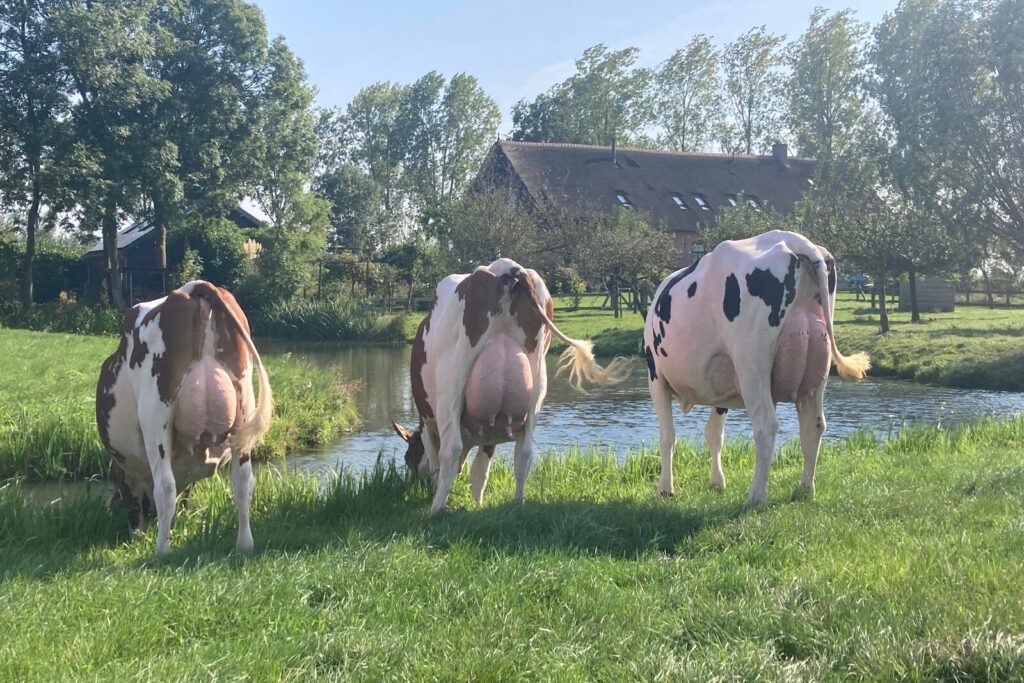
The mental barrier: daring to let go
Breeding is all about progress. Yet many dairy farmers find that results in practice fall short of what the figures on paper promise. For years, breeders have been taught to rely on breeding values. These figures provide guidance and a sense of control. But what if that control turns out to be only an illusion?
Make a difference
The aAa method — also known as the Triple A system — primarily requires a different way of thinking. It is not about one specific trait, but about the complete animal and how all aspects of its conformation work together. The mental barrier of partly letting go of a focus on figures may be the greatest challenge. That is exactly where the difference begins: looking at the bigger picture rather than zooming in on individual details. Those who dare to choose balance are choosing a more stable and sustainable breeding strategy.
From paper to practice
Many dairy farmers will recognize this: a good bull mated to a good cow, yet the daughters still fail to meet expectations. The genetic potential is there, but when the mating is not right, that potential does not come to the fore. This raises familiar questions:
- Why are my cows becoming narrower?
- Why is that high milk yield on paper not reflected in the tank?
- Why am I not achieving a uniform herd, despite selecting highly ranked bulls?
These experiences make it clear that breeding is about more than simply combining high breeding values. Ultimately, it is the cow’s conformation that determines the results in practice.
Not simply a sum of breeding values
Breeding values indicate what the daughters look like on average, but what the dairy farmer ultimately gets is the result of an individual mating. That is why breeding values are primarily a selection tool.
To create a good mating, the conformation of the cow and the bull must be matched carefully. This is where the foundation of the aAa method lies. It is not the average that matters, but the individual needs of the cow. The focus therefore shifts from figures to functionality.
Address the root cause
The aAa method focuses on the root cause of problems. Developed from practical experience, it analyses what a cow lacks in her conformation, rather than what she adds on paper. Traditional linear breeding places a strong emphasis on figures. A high milk index inspires confidence, but a cow bred solely for production is not always built to sustain that performance over a long period without problems. By focusing on balance, a stronger foundation is created.
The role of genomics
Genomics has accelerated breeding progress, but its effects continue to influence breeding values for many years. On paper, new, highly ranked genomic bulls may appear impressive, while proven older bulls fade into the background. In addition, annual base adjustments cause figures to shift, which can lead to uncertainty and concern.
That is why many dairy farmers deliberately choose a practical and independent approach. The aAa method focuses on functionally built cows that produce sustainably and trouble-free, placing less strain on the cow and creating fewer concerns for the dairy farmer.
Coding as the foundation for direction
A successful application starts with fully coding the herd. Every cow that will be bred from is analysed individually. The code identifies her main functional weakness, but more importantly, the underlying causes of those weaknesses. You first need to understand the causes of the problems before you can solve them in the next generation.
Coding breeding bulls
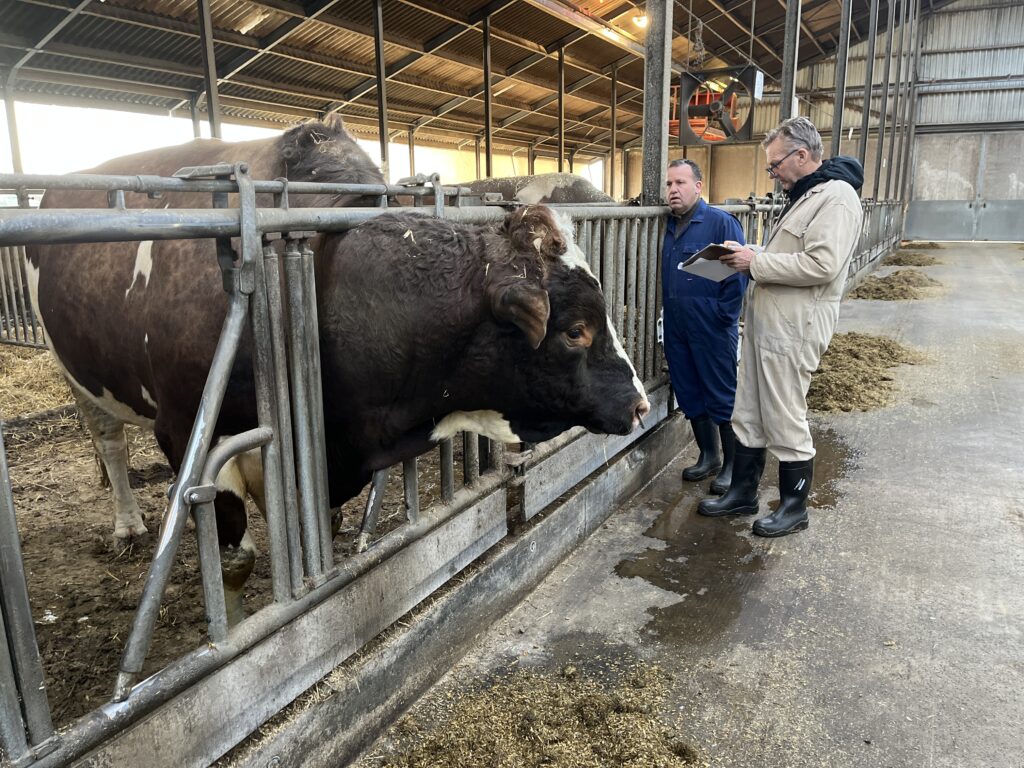
K.I. Samen’s breeding bulls are also officially coded by certified aAa analysts. Jan Schilder and Maurice Kaul—both thoroughly trained in Bill Weeks’ aAa method—analyse the bulls’ conformation.
Jan explains: “We assess the bull according to the qualities he possesses to a greater or lesser extent. We look at how the different body parts work together and influence one another. Form determines how a bull or cow functions. Functionality is directly related to the conformation of every animal.”
All qualities
“Most bulls do not possess the same level of quality for all six codes. Occasionally, we see bulls whose qualities are very evenly balanced. A good example is Big Malki (aAa 165423): a correctly built bull, with form and function in balance, who also added the qualities the population needed most at that time.”
Does the perfect bull exist, then?
Jan emphasises: “A bull is only as good as what the cow needs. For example, when a cow needs a wider rump and more room for the udder, a bull with code 3 as his first code can be a good choice. At the same time, we see that bulls with code 5 often fit well with today’s population.”
Maurice adds: “Bulls that score highly for longevity often show few extremes. That is why extreme bulls should be avoided.”
Result: breeding for balance
Choosing a bull with suitable codes and less spectacular figures is not a step backwards, but an investment in the future. Fewer heifers are lost due to conformation and functional problems. This leads to less corrective breeding, greater longevity, higher lifetime production and, above all, more enjoyment in the work.
By consistently choosing balance, you create a uniform and trouble-free herd, with cows built to perform and sustain that performance for a long time.
Practice proves it
Daring to choose balance requires confidence. Those who look at what a cow truly needs are building a sustainable and future-proof herd. Ultimately, one principle remains central: it is not the paper, but practice, that proves it.
K.I. Samen: a wide range of aAa codes
K.I. Samen offers an extensive selection of aAa-coded bulls, with a wide range of codes. This means there is a suitable bull available for every improvement needed within the herd, creating more opportunities for targeted matings. It is important that the chosen bull matches the farm’s breeding goal.